During the operation of electronic devices, industrial machinery, and other products, the cooling fan plays a crucial role in maintaining the normal temperature of the equipment and ensuring stable operation. However, there are various types of cooling fans on the market with different performance parameters.
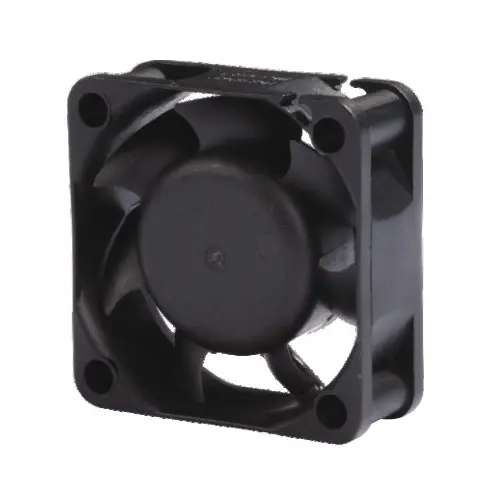
It is crucial to choose a suitable cooling fan from them. The following will provide a detailed analysis of the key points for selecting a cooling fan from multiple dimensions. The first step in selecting a cooling fan is to clarify the usage scenario and cooling requirements. The heat generation and heat dissipation space of different devices vary greatly. For example, the CPU cooling requirements of personal computers are completely different from those of large industrial equipment. To cool the computer CPU, it is necessary to choose a fan with moderate air volume and high air pressure to quickly remove the heat from the core components; Industrial equipment usually generates a large amount of heat, so it pays more attention to the high air volume and pressure of the fan, which can dissipate a large amount of heat in a short period of time. In addition, the running time of the equipment also needs to be considered. If the equipment needs to operate continuously for a long time, the cooling fan is required to have high reliability and stability to ensure long-term efficient heat dissipation. Focusing on performance parameters, air volume is an important indicator for measuring the heat dissipation capacity of a cooling fan, usually measured in CFM (cubic feet per minute). The larger the air volume, the more heat is carried away per unit time. But the larger the air volume, the better. It also needs to be selected based on the cooling space and cooling requirements of the equipment. Wind pressure reflects the ability of a fan to overcome resistance, measured in Pa (pascals). In situations where the heat dissipation channel is long and there are many obstacles, a high-pressure fan can more effectively promote air flow and ensure smooth heat dissipation. The rotational speed is closely related to the air volume and pressure. Generally speaking, the higher the rotational speed, the greater the air volume and pressure. However, it also brings higher noise and energy consumption. Therefore, it is necessary to seek a balance between heat dissipation effect, noise, and energy consumption. Considering the types of fans, cooling fans are mainly divided into DC cooling fans, AC cooling fans, and EC cooling fans. DC cooling fans have good speed regulation performance and low energy consumption, suitable for electronic devices with precise cooling requirements and limited space, such as computer case fans, CPU fans, etc; AC cooling fans have high power, air volume, and air pressure, and are commonly used in large industrial equipment, data centers, and other places that require extremely high cooling efficiency; EC cooling fans combine the advantages of DC and AC fans, with the characteristics of intelligent speed regulation, high efficiency and energy saving, and are widely used in fields such as new energy vehicles and communication equipment. Choosing the appropriate fan type based on actual needs is the key to ensuring effective heat dissipation. Adapting to the usage environment has a significant impact on the selection of cooling fans. In high temperature, high humidity, or dusty environments, it is necessary to choose fans with high temperature resistance, moisture resistance, dust prevention, and other characteristics. For example, in places with high levels of dust such as industrial workshops, cooling fans with higher protection levels should be selected to prevent dust from entering the interior of the fan, affecting its normal operation and even damaging the motor. For noise sensitive environments such as offices, bedrooms, etc., priority should be given to choosing fans with good noise reduction effects. By checking the noise indicators of the fans (in dB, decibels), low-noise products can be selected. In addition to the above points, the size of the fan needs to be compatible with the installation space of the equipment. If the size is too large to install, it may not meet the heat dissipation requirements; Brand and after-sales service should not be ignored. Famous brands' cooling fans have better product quality and performance guarantees. Good after-sales service can solve fan problems in a timely manner, reducing losses caused by cooling failures.

